Healing Doesn’t Always Have Four Walls
Article by Ashley Borowiak
We all know the room.
Beige walls. Two stiff chairs. A ticking clock that seems louder than it should be. For decades, we’ve been told this is what healing looks like. You sit. You talk. You analyze the pain until it makes sense.
But for many of us, that room doesn't feel like safety. It feels like scrutiny.
For countless women, nonbinary folks, and survivors of trauma, clinical spaces can inadvertently replicate the very power dynamics we are trying to heal from. They can feel sterile. Expensive. Disconnected.
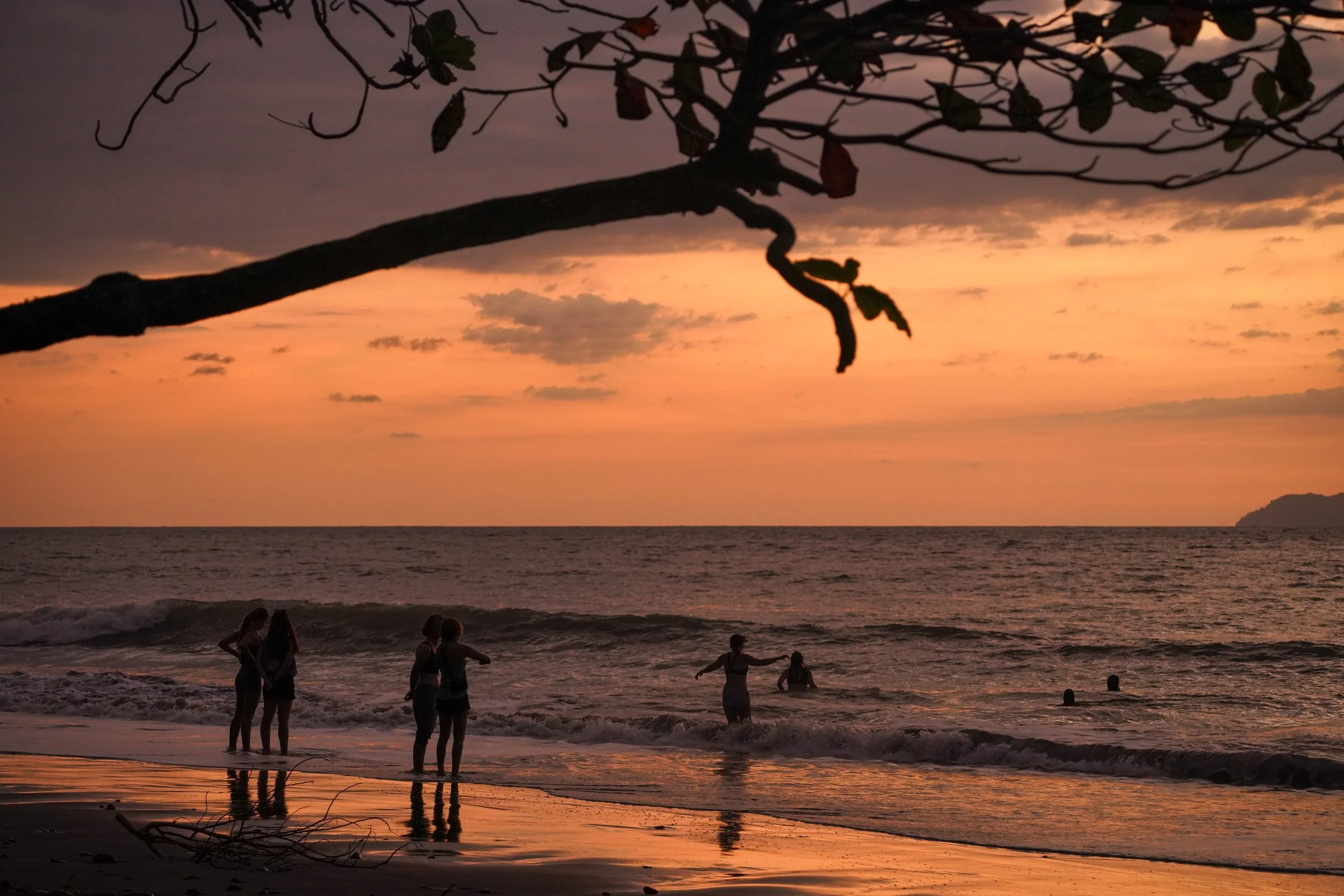
Groundswell Community Project exists to ask a different question. What if healing didn't happen in a room at all? What if it happened in salt water, with a board under your chest and a community at your back?
It’s not just a change of scenery. It’s a different kind of medicine.
Why the Body Needs More Than Talk
Traditional therapy is a "top-down" process. You use your brain to try to manage your emotions. But trauma doesn't just live in the brain. It lives in the body. It sits in tight shoulders and a shallow breath.
We cannot always think our way out of a nervous system that is stuck in survival mode. While talk therapy is vital for processing the story, surf therapy is vital for processing the sensation.
This isn't just poetic. It’s biological. Marine biologist Dr. Wallace J. Nichols calls it "Blue Mind." It's the meditative state our brains enter when we are near water.
Research shows that simply looking at the ocean lowers cortisol and increases dopamine. When you combine that with the physical exertion of surfing, you trigger a biological reset that cognitive therapy sometimes cannot reach on its own.
In the water, we aren't just talking about resilience. We’re practicing it. We’re teaching the body that it can handle stress, wipe out, and surface again.
Safety Outside the System
For marginalized communities, the healthcare system hasn't always been a place of care. It’s often been a place of judgment, legislation, or dismissal.
The ocean offers a radical alternative.
Take Maria, a participant from a past circle. On land, she felt the constant pressure of "invisible borders." She felt the weight of her status and the need to stay small to stay safe.
But the ocean doesn't have borders.
"The ocean didn’t ask for my papers," she told us. "It didn’t question my body or my voice. Out there, I belonged fully."
For a person who’s spent their life being told they are "too loud" or "not enough," the ocean offers a space where they don't have to shrink. They can take up space. They can be powerful.
This isn't just exercise. It's ecotherapy. It's the recognition that nature isn't just a backdrop for our lives but a partner in our healing.
Healing is a Team Sport
In the clinical model, healing is often private. It can be a secret you keep for 50 minutes a week.
But isolation is where trauma thrives.
At Groundswell, we replace the closed door with the open beach. We replace the "doctor-patient" hierarchy with a circle of peers and trained mental health professionals.
When a participant paddles for a wave, they hear people cheering for them. When they fall, they see they aren't alone in the impact. This rewires the story of shame. It proves that you can be vulnerable and supported at the same time.
A New Definition of "Therapy"
We are expanding the vision of where healthcare can happen.
Sometimes, healthcare looks like a group of strangers zipping up wetsuits in a parking lot. Sometimes, it looks like gliding into a wave. Sometimes, it looks like reclaiming the joy that trauma tried to steal.
Groundswell is building a future where these braver spaces are accessible to everyone. Through scholarships, facilitator training, and research, we are proving that the ocean holds a medicine all its own.
Sometimes, it’s waiting for you at the water’s edge.
Ready to dive deeper?
Join a program, support a scholarship, or get trained as a facilitator.
Help us bring the ocean’s healing to the people who need it most.