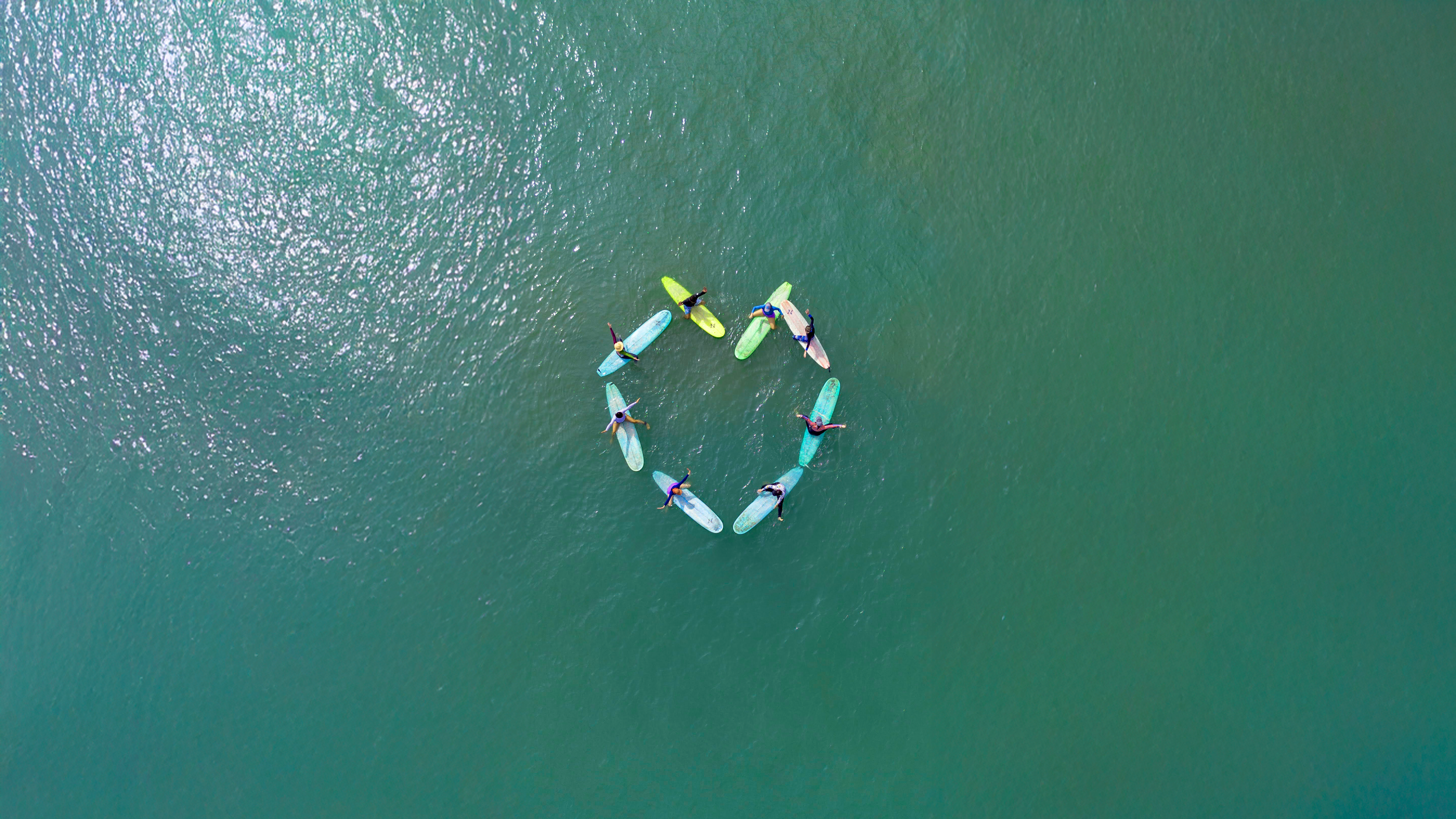
When the Ocean Becomes Medicine: Understanding Surf Therapy
By Deborah Jessen, Writer & Surfer
What makes Surf Therapy different from a regular surf lesson?
It’s a question worth asking, because it helps reveal what truly lies behind surf therapy, and how deeply it can touch and transform our lives.
Let’s first take a look at a classic surf lesson.
How is it structured, what do we learn, and what’s actually happening inside, mentally and emotionally?
The feeling of surfing for the first time
I still remember my very first surf lesson so clearly.
I was nervous, but at the same time filled with anticipation, excited to finally get into the water and connect with this powerful element.
Yet, the uncertainty made my thoughts spin: Can I do this? What if I can’t stand up? What if I fall? What’s underneath me in the water?
Just the thought of the ocean’s strength made my heart race.
After a quick introduction to theory, safety, and equipment, it was time to begin.
We paddled together past the breaking waves, to where the smaller ones began to roll in. I lay on my big foam board, waiting for instructions.
Then it came; my very first little wave.
The surf instructor called out, Are you ready? I nodded, even though I wasn’t sure at all. I paddled, felt a push from behind, and suddenly the wave lifted me.
Stand up! someone shouted, and without thinking, I did.
For a few seconds (which felt like forever) I was standing, gliding across the water.
Just me, the wave, the ocean, and that indescribable feeling of freedom.
Joy, excitement, lightness, adrenaline, all at once.
There was no frustration, only laughter and pure happiness.
I was hooked. That moment when you feel the ocean beneath you, alive and powerful, it pulls you in. From that day on, I knew: I wanted more.

How the ocean positively impacts us
Beyond all those emotions and the rush of adrenaline, a surf lesson is, at its core, still a sport. It’s about technique, progress, and learning how to catch and ride a wave.
And yet, even this alone, the lifestyle, the rhythm, the immersion in nature, can have a deeply positive impact on mental health.

As the Blue Mind Theory beautifully explains: life by or near the ocean nourishes the soul. Simply being close to the sea reduces stress, promotes relaxation, enhances mood, and supports both physical and emotional well-being.
Even short moments by the water can have healing effects.
“Neuroscientists and psychologists report that the ocean and wild waterways are a wellspring of happiness and relaxation, sociality and romance, peace and freedom, play and creativity, learning and memory, innovation and insight, elation and nostalgia, confidence and solitude, wonder and awe, empathy and compassion, reverence and beauty — and help manage trauma, anxiety, sleep, autism, addiction, fitness, attention/focus, stress, grief, PTSD, build personal resilience, and much more.”
- Wallace J. Nicols, Blue Mind Research
Why the ocean heals
Saltwater soothes & strengthens: Magnesium and minerals help release stress, calm the nervous system, and it can reduce inflammation.
The ocean brings us into balance: The flow of the waves can even help regulate our heartbeat.
Surfing releases happiness hormones: Movement in the ocean works like a natural antidepressant and releases endorphins.
Healing in the here and now: When we surf, there’s no space for overthinking about situations out of the water, these worries stay on the shore.
New self-confidence: Every wave we catch gives us courage, joy, and the feeling of taking back control of our mind.
Community and belonging: Surfing connects us not only to ourselves, but also to others, their stories, and to the power of the sea.
From my own experience, and the time I’ve spent in the water: I truly believe that the ocean and surfing makes us humble. It teaches us so much about being in the present moment, to get back to our true self and let go of everything which doesn’t deserve our attention.
Of course, surfing isn’t always easy, the ocean can be rough sometimes.
Each wave and each session come with new conditions that can test our patience and courage.
And yet, the more time you spend in the water, the more you start to trust yourself, the waves and the whole process that comes with it.
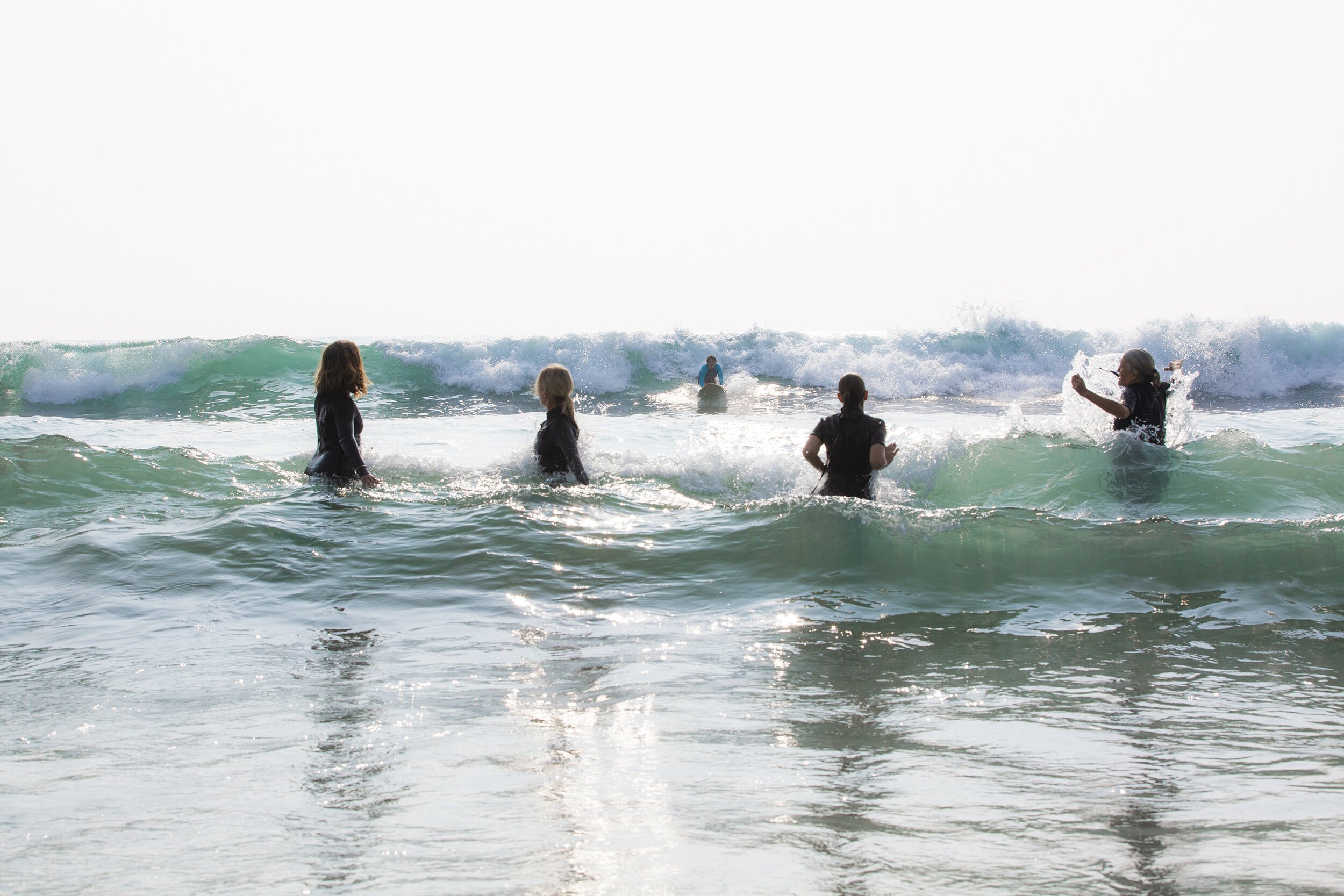
Surf Therapy – When the ocean becomes a place of healing
And this is exactly where surf therapy begins.
It goes far beyond learning to surf, combining the ocean’s natural healing power with therapeutic practices, rituals, and community.
Surf therapy isn’t about performance or being the best surfer out there. It’s about being present, feeling safe, and trust the process.
It welcomes individuals of all backgrounds and cultures to come back to themselves, through the waves, movement, and through the connection and the empowerment within a supportive group.
A surf therapy session begins often with grounding and letting go.
Breathing exercises, setting intentions, and sharing circles that create trust before entering the water.
It’s followed by gentle movement, surfing, and time in the ocean - not to compete, but to feel deeply.
Surf therapy uses the elements of somatic healing, eco- and ocean therapy, mindfulness, and breathwork.
These practices help participants regulate emotions, reconnect with their bodies, and rediscover a sense of safety and belonging.
Just like the waves rolling in, participants learn to move with it just as the life’s tempo. It‘s an invitation of finding resilience, confidence, and peace along the way.
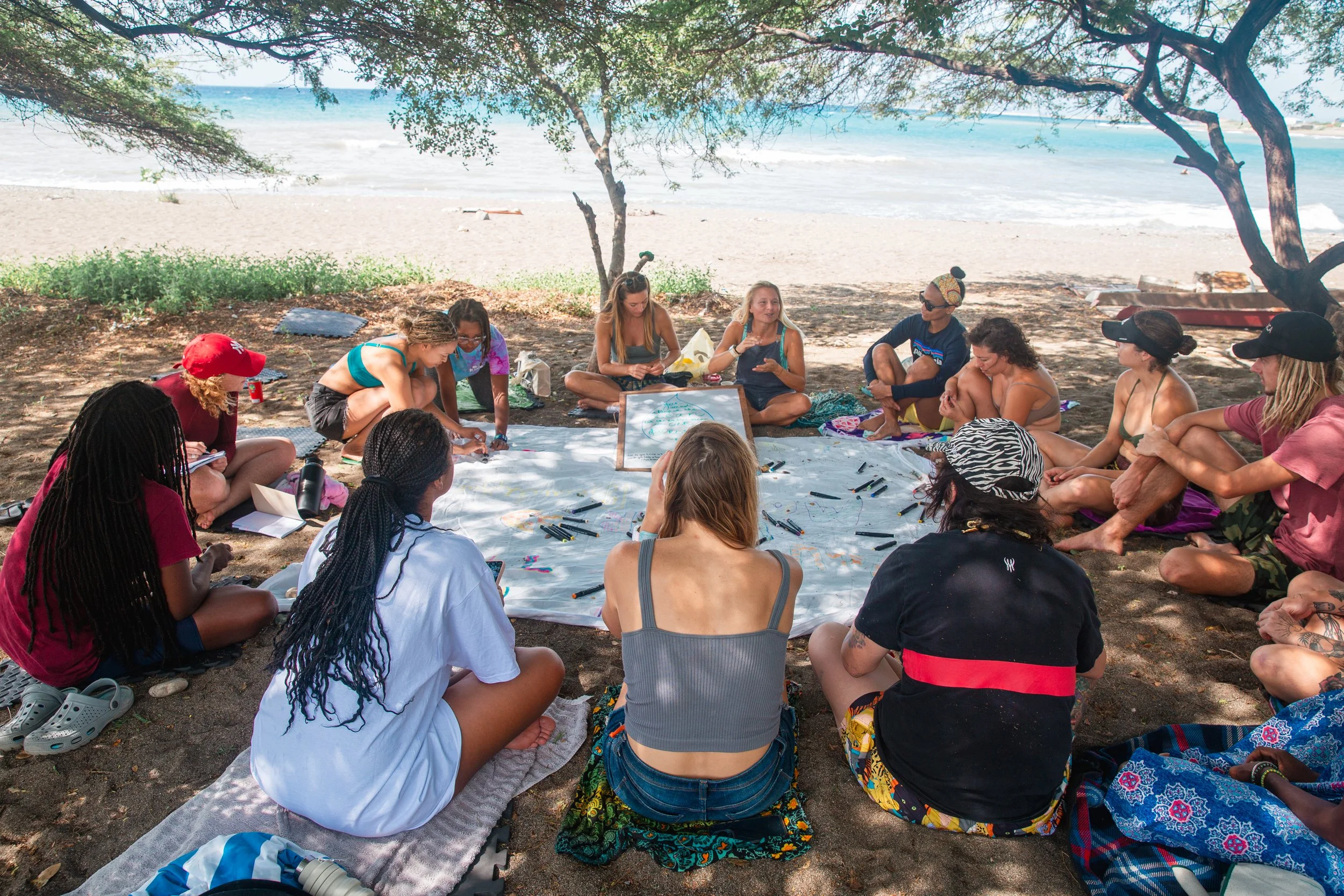
Healing in Community
What sets Surf Therapy apart and makes it a powerful tool is that it happens in community.
Healing here doesn’t happen in isolation, but through the strength of community.
While traditional talk therapy often happens one-on-one, surf therapy reconnects us with collective forms of healing.
Sharing, laughing, falling, and rising together normalizes the experience of trauma and builds a deep sense of belonging that many women have long missed.
Each individual moves at their own pace, supported by others who are also learning to let go, to trust, and to feel.
In this shared experience, trauma loses its silence and the shame not to talk about it.
Instead of comparison, there is belonging.
Instead of pressure, there is compassion.
Surf therapy reminds us that healing isn’t about fixing ourselves, it’s about remembering who we are when we feel safe, supported, and connected.
More Than a Surf Lesson
All these elements show that surf therapy is much more than a surf lesson.
It’s a safe, holistic space of healing where women can bring their fears, doubts, and stories, and transform them into something new within the ocean.
Surf therapy invites you to come home — to yourself, and to the healing power of the ocean.