
A Case Study in LGBTQ+-Affirming Surf Therapy
About Element Q
Element Q Healing Center is the only treatment center in San Diego, California dedicated exclusively to the LGBTQ+ community. They offer trauma-informed mental health care and co-occurring disorder treatment, with a clinical model built around the understanding that healing is holistic. It lives not just in the mind but in the body, in connection, and in community. Their clinical approach weaves together traditional therapy, somatic work, and experiential modalities like music, art, photography, and movement because they believe that trauma and mental health show up in the body, not just in the mind.
What makes Element Q distinctive is not just who they serve, but who they are. Nearly every member of the full-time clinical and operations team identifies as queer. This means clients do not need to explain themselves, justify their identity, or brace for misunderstanding before they can get to the work. “You don’t have to reshare your story,” says Keoni Carthen, Director of Operations at Element Q. “We already have a general idea. We’re all a part of the community.”
How the Partnership Started
When Element Q's clinical director first came across Groundswell's website, the reaction was simple: this sounds really cool. The idea of taking therapy to the beach, using the ocean as a healing tool, felt aligned with everything Element Q believed about holistic care. But the path from curiosity to the water was not without hesitation.
When the team began floating the idea with clients, the concerns were immediate and valid. For many LGBTQ+ clients, the idea of being in a bathing suit at a public beach brought up real discomfort around body and identity. Others were simply afraid of the ocean. Some worried about what surf therapy actually meant and whether they would be expected to swim, paddle, or perform in ways that felt out of reach.
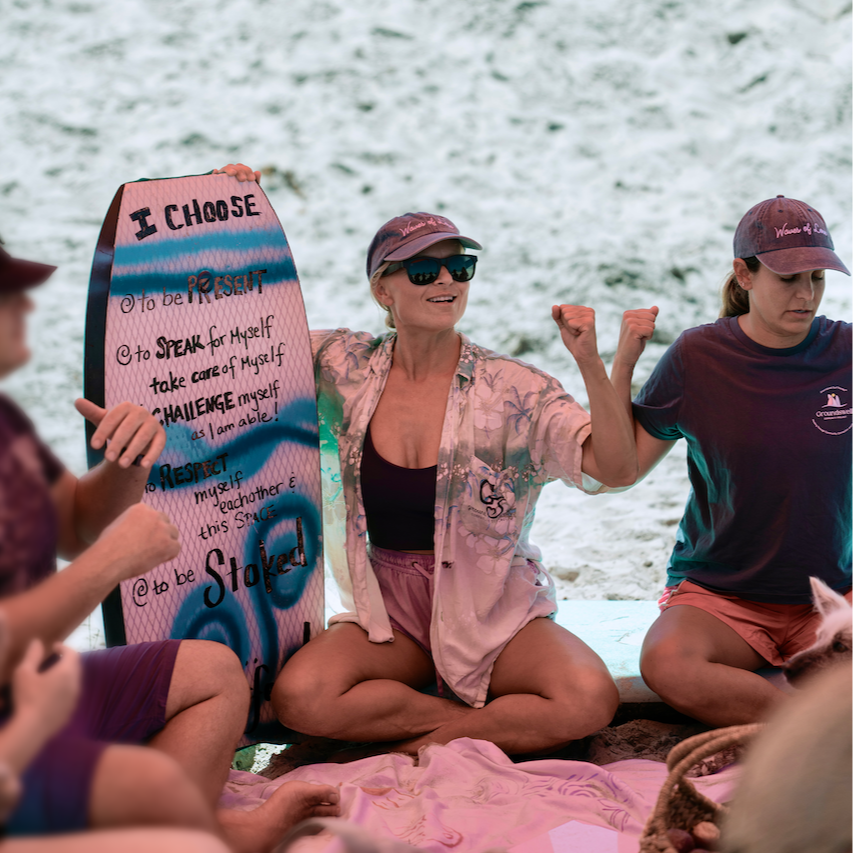
Before the first session ever took place, the Groundswell team came to Element Q's site. They met with clients and clinicians, answered questions, and gave everyone a sense of what a day at the beach with Groundswell actually looks like. That visit mattered. It began to build the trust that no amount of explanation could fully accomplish on its own.
Groundswell addressed each concern directly. A private changing tent was set up on the beach so clients could change in private. Wetsuits were available in a range of shapes and sizes. Water participation was always optional, and nobody was pushed onto a board before they were ready. The team moved at the pace of the group, letting comfort build naturally over time and across sessions.
It still took a leap of faith. But as Keoni puts it, the best way to understand surf therapy is to experience it. Ideally more than once. The first time, nerves tend to run the show. The second time, something shifts. And by then, most people are asking when they can come back.
What the Program Looks Like
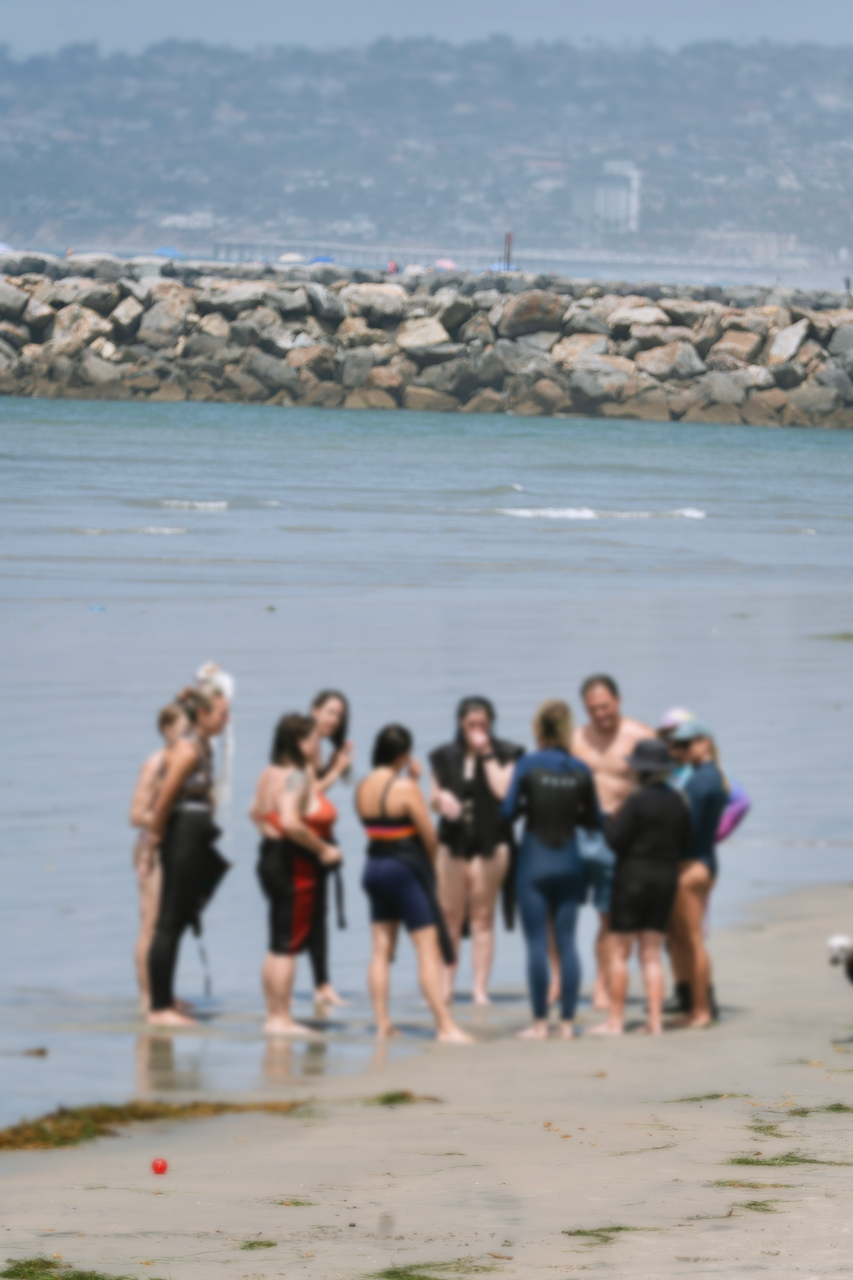
Element Q clients participate in Groundswell surf therapy sessions facilitated by the Groundswell team. Each session runs three hours and is designed around the Groundswell Surf Therapy curriculum, which blends psychoeducation, nervous system regulation, group sharing, expressive arts, and mindfulness into a cohesive arc that moves from land to water.
Sessions begin on shore. The group opens with grounding practices and a circle that invites participants to arrive as they are. The land based portion includes psychoeducation about the ocean and the nervous system, movement and breath work to support regulation, and expressive arts activities drawn from the Groundswell workbook.
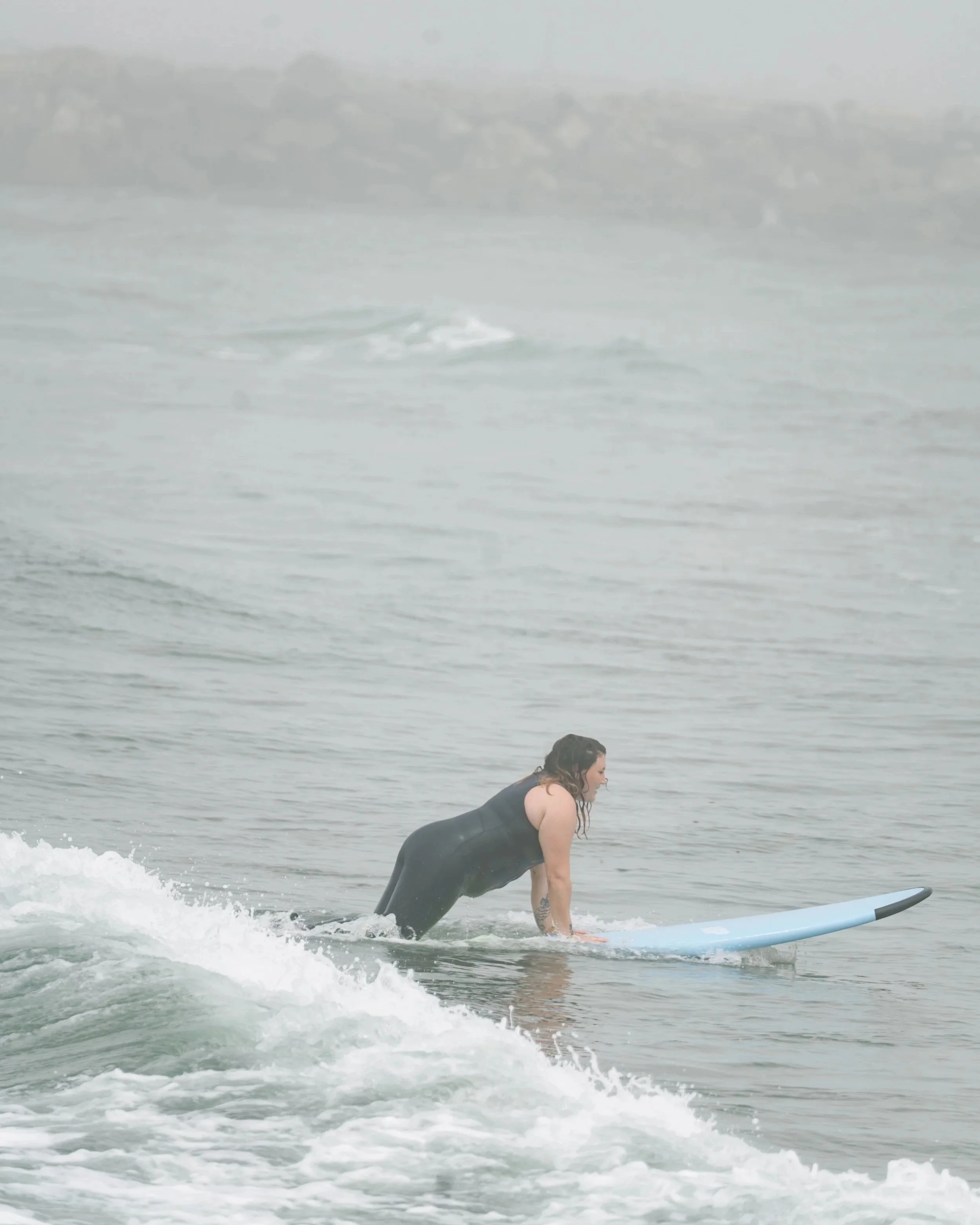
From there, participants are invited into the water on their own terms. A trained facilitator is matched one-on-one with each person who enters the ocean, staying present and responsive throughout. The session closes with a circle on shore where participants are invited to reflect and share.
Outcomes and Impact
Clients came back different.
In the sessions immediately following surf therapy, Element Q's clinical team consistently heard the same thing: clients had done something new. Gone to the dog park. Stayed an hour longer than they expected. Taken a friend to the beach. Written in their journal that night. The week after a session, people showed up to their groups with stories of small, meaningful steps back into the world.
One client, who had struggled severely with PTSD symptoms began, slowly, to re-enter the world. First 20 minutes at the dog park. Then longer. Then inside a store for an hour, grounding themselves with sensory details. By the time they graduated from the program, they were planning to train as a somatic practitioner. The beach where surf therapy took place became the beach they returned to on their own.
Many clients arrived with real fear of the ocean, expecting to be thrown into waves and required to perform. What they found instead was shallow water, gentle conditions, a trained facilitator beside them, and the ground beneath their feet. Once reassured of all of that, the fear began to loosen. The confidence that arrived in the water did not stay there. It followed people home.
Rather than talking about mental health in a clinical room, clients were encouraging each other, helping with wetsuits, celebrating first waves. Returning participants became informal guides for newcomers. The group dynamic that formed on the beach was looser, more playful, and in many ways more open than what the experience is in the office setting.
Benefits for Clients and Clinicians Alike
Surf therapy at Groundswell is designed to benefit everyone in the water. That includes the clinical team. Every EQ clinician who joined a session returned noticeably reset. The cumulative weight of holding space for others day after day can quietly erode a clinician's own reserves. The ocean offered something different: a space where the clinician was not required to lead, where the environment itself did much of the work, and where simply being present was transformative.
Clinicians came back from sessions with lighter systems, renewed energy, and a different relationship to the work. The beach became as much a resource for the team as for the people they serve. The benefits, it turned out, were not one-directional. In a field where burnout is endemic, that matters.
What Element Q Has Observed
Surf therapy is a relatively new entrant in the field of mental health treatment, and the signs of impact being made at the water's edge with this specific community are already clear. Element Q is the first LGBTQ+-affirming treatment center in Southern California to integrate surf therapy into its programming and other treatment centers have started to take notice.
The answer is a partnership that begins with trust, is built on identity-affirming care, and grows through consistent, consent-based presence at the beach.
“Try it out. Don’t be scared. Experience it at least twice, because the first time you’re so nervous to be there, but the second time, it’s like — oh, so this is what it feels like. Feel how relaxed you feel in your own body, your own nervous system. Sit back and let the ocean do its thing. Watch how your clients show up the next day. Because that’s the biggest thing. We do this for our clients — and amazingly, once you’re there, you’re like, oh, I’m also doing this for myself.”
Surf therapy is still establishing itself in mainstream mental healthcare, and that process takes time. But the clearest path forward is the same one that worked for Element Q's clients: dip your toes in, metaphorically and physically, and let the experience speak for itself. The biggest barrier to trying something new is almost always in our own minds. Once you are at the water's edge with a skilled team, a supportive community, and the ocean doing what it does, that barrier tends to dissolve.
To get in contact with Element Q, please navigate to their website here.
To get in contact with Groundswell, please contact our team at info@groundswellcommunity.org.
